

Open vs. Enclosed Car Shipping: How to Choose the Right Option for Your Vehicle
By The AutoTransport Guy
Not every car needs enclosed transport, and not every shipment should be based only on price. Here’s how to choose the safest, smartest option for your vehicle, your route, and your budget.
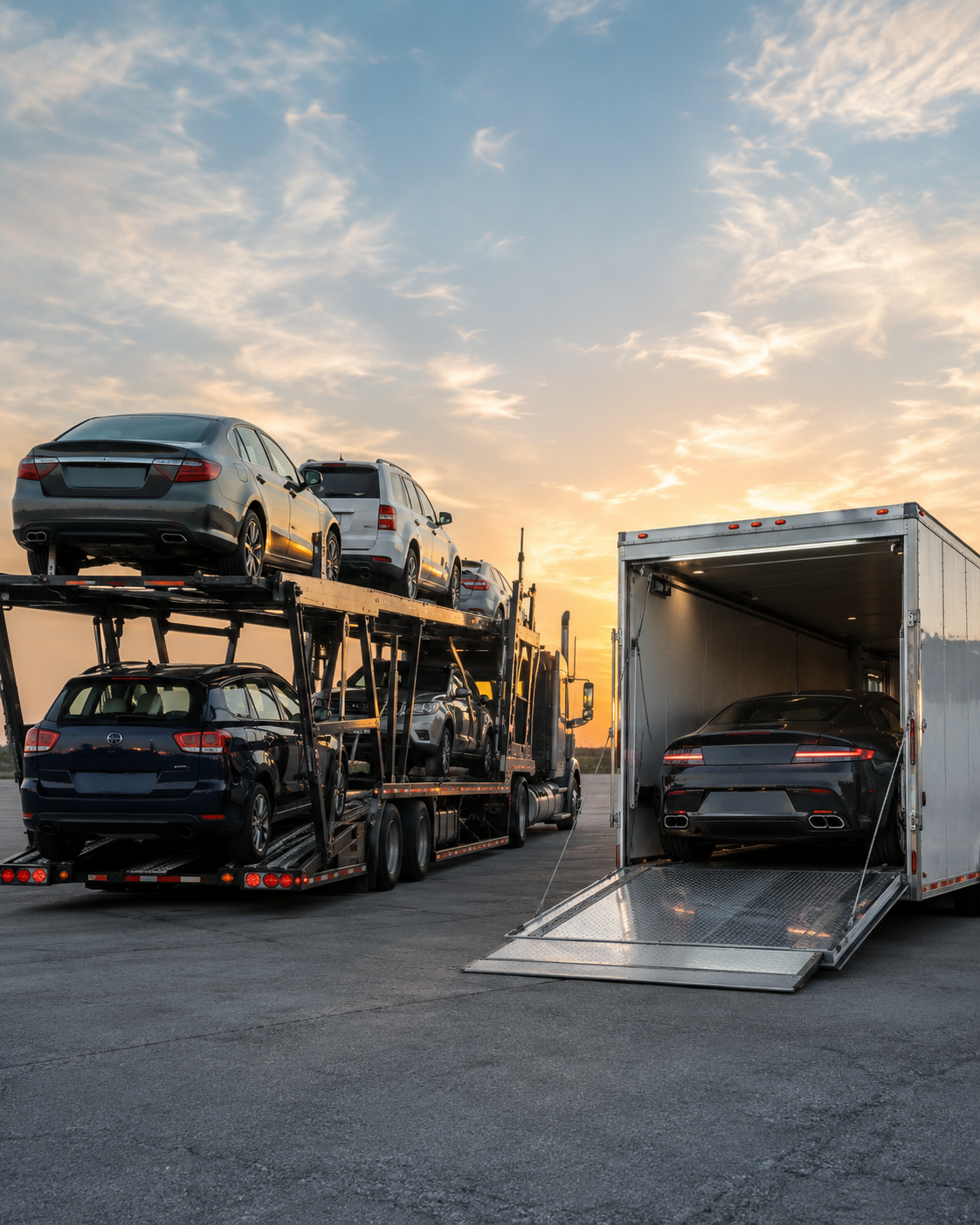
You finally decided to ship your car.
Great decision.
Maybe you are moving across the country. Maybe you bought a vehicle from another state. Maybe you are sending a car to a family member, relocating for work, heading south for the winter, or trying to avoid adding unnecessary miles to your vehicle.
Whatever the reason, one question usually comes next:
“Should I choose open or enclosed car shipping?”
At first, the answer may seem simple.
Open transport costs less. Enclosed transport offers more protection.
But the real decision is not only about price.
It is about the type of vehicle you are shipping, the value of that vehicle, the route, your timing, your comfort level, and how much protection makes sense for your situation.
Choosing the right transport option can help you avoid stress, confusion, unnecessary costs, and unrealistic expectations.
The good news is this:
For many everyday vehicles, open transport is a smart and practical choice. For special vehicles, enclosed transport may be the better decision.
1. What Is Open Car Shipping?
Open car shipping is the most common type of auto transport.
If you have ever seen a large car carrier on the highway loaded with vehicles on two levels, you have seen open transport in action.
These are the same general style of carriers often used to deliver vehicles to dealerships. Cars, SUVs, trucks, and vans are loaded onto an open trailer and transported from pickup to delivery.
Open transport is popular because it is widely available, practical, efficient, and usually more affordable than enclosed shipping.
For many customers, it is the best balance between cost, availability, and reliability.
That does not mean the vehicle is treated carelessly. It simply means the car travels on an open carrier rather than inside a covered trailer.
The vehicle is exposed to normal road and weather conditions, similar to what it would experience if you drove it yourself across the highway.
For most daily drivers, family vehicles, work vehicles, standard SUVs, and regular cars, open shipping is often the right choice.
Open Car Shipping Is Usually Best For:
- Daily driver vehicles
- Standard sedans
- Family SUVs
- Pickup trucks
- Common vehicle moves
- Budget-conscious customers
- Popular routes with more carrier availability
- Customers who want a practical, reliable transport option
2. What Is Enclosed Car Shipping?
Enclosed car shipping means your vehicle travels inside a covered trailer.
Instead of being exposed to the open air, the vehicle is protected inside an enclosed carrier during transport.
This option provides additional protection from weather, road debris, dust, dirt, and other exposure that can happen during highway travel.
Enclosed transport is commonly used for vehicles that are more valuable, more delicate, more collectible, or more emotionally important to the owner.
For example, a restored classic car, exotic sports car, luxury vehicle, collector car, custom build, low-mileage vehicle, or specialty automobile may be a better candidate for enclosed transport.
It is not always necessary for every car.
But when the vehicle deserves extra protection, enclosed shipping can provide greater peace of mind.
3. When Enclosed Transport Makes More SenseEnclosed transport is not just about showing off. Sometimes it is the practical choice. If a vehicle is rare, expensive, restored, custom-painted, collectible, or highly sentimental, extra protection may be worth considering. The cost difference may make sense when compared with the value of the vehicle and the owner’s comfort level. Think of it this way: If you would be uncomfortable leaving that vehicle exposed to weather, dust, or highway conditions for several days, enclosed transport may be worth the conversation. A standard commuter car may not need enclosed shipping. A classic car you spent years restoring might. |
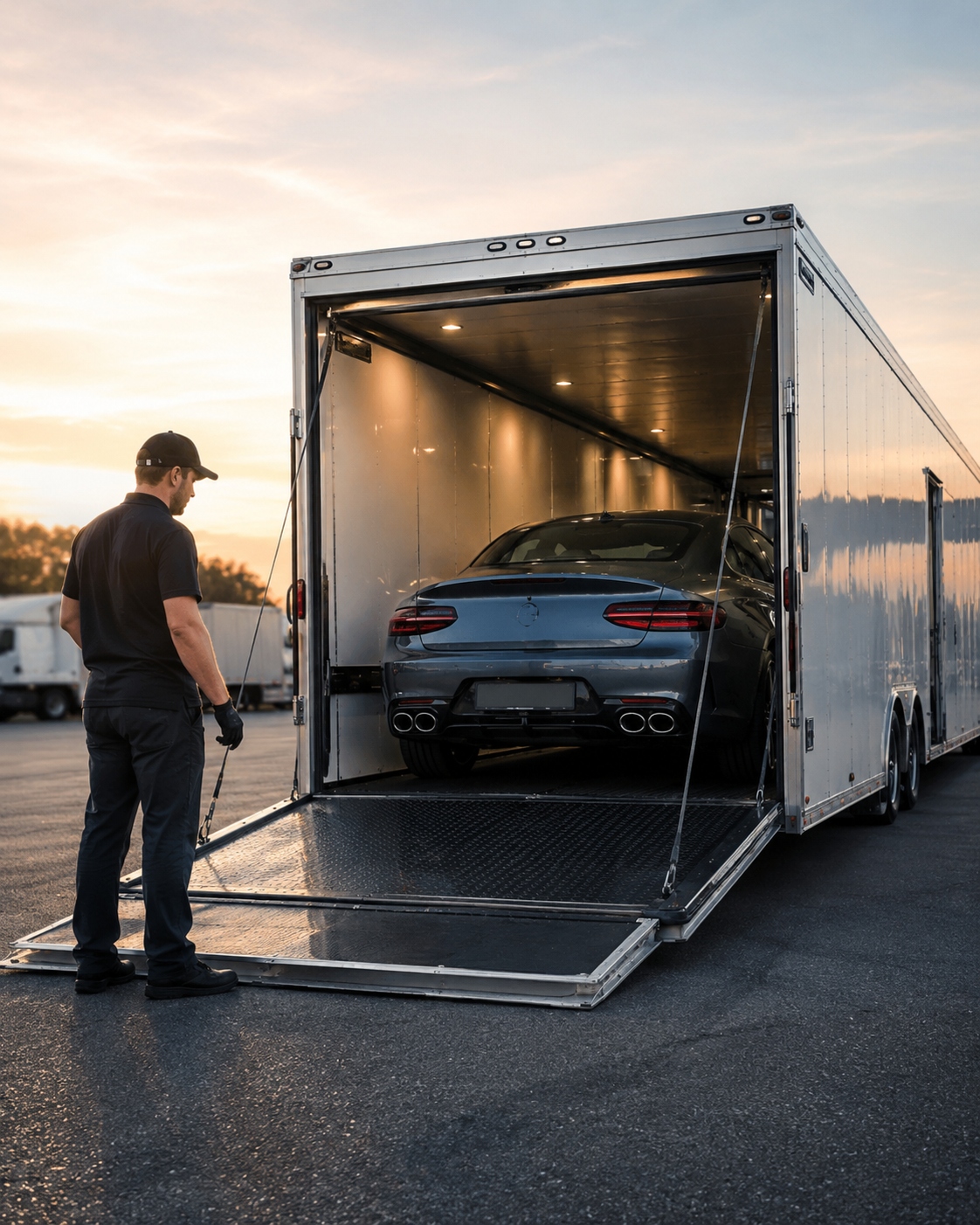
Enclosed car shipping is often chosen for luxury, classic, exotic, collector, or high-value vehicles that need additional protection. |
Enclosed Car Shipping Is Usually Best For:
- Classic cars
- Exotic vehicles
- Luxury vehicles
- Collector cars
- Restored vehicles
- Custom vehicles
- High-value vehicles
- Low-mileage cars
- Vehicles with special paint or modifications
- Cars with strong sentimental value
4. Open vs. Enclosed Car Shipping: The Simple Comparison
The easiest way to understand the difference is to compare the two options side by side.
Neither option is automatically “good” or “bad.”
The right choice depends on what you are shipping and what matters most to you.
| Feature | Open Transport | Enclosed Transport |
|---|---|---|
| Cost | Usually more affordable | Usually higher cost |
| Availability | More common and easier to find | More specialized and limited |
| Protection | Standard transport protection | Additional protection from exposure |
| Best For | Daily drivers and standard vehicles | Luxury, classic, exotic, and collector vehicles |
| Weather Exposure | Vehicle is exposed to normal road and weather conditions | Vehicle travels inside a covered trailer |
| Carrier Options | More carrier availability on many routes | More specialized carrier selection |
| Practical Choice For | Most everyday shipments | Vehicles needing extra care or added protection |
Not Sure Which Option Is Right?
Transport My Automobile can help you compare open and enclosed car shipping based on your vehicle, route, timing, and budget.
Request a Free Car Shipping Quote5. Is Open Car Shipping Safe?
This is one of the most common questions people ask.
And it is a fair question.
Open transport may look exposed because the vehicles are visible on the trailer. But that does not mean it is unsafe.
Open car shipping is widely used across the auto transport industry. It is a common method for moving standard vehicles across cities, states, and long-distance routes.
Many vehicles you see at dealerships likely arrived on open carriers.
The important thing to understand is this:
Open transport is not “unsafe.” It is simply less protected from exposure than enclosed transport.
Your vehicle will be exposed to normal road conditions, weather, dust, and possible road debris, similar to what it would experience during a long highway drive.
For many standard vehicles, that level of exposure is acceptable.
For special vehicles, it may not be.
6. Is Enclosed Car Shipping Worth It?
Enclosed car shipping can be worth it when the vehicle deserves additional protection.
But it is not always necessary.
That is where honest guidance matters.
If you are shipping a normal daily driver, open transport may be the practical choice. If you are shipping a rare classic, luxury car, exotic vehicle, restored car, or high-value automobile, enclosed transport may be the smarter decision.
It is not about choosing the most expensive option.
It is about choosing the option that matches the vehicle.
A family SUV and a restored classic convertible do not always need the same transport plan.
A work truck and a collector Porsche do not always belong in the same category.
The best option is the one that makes sense for the car, the customer, and the situation.
7. The Price Difference: Why Enclosed Usually Costs More
Enclosed transport usually costs more than open transport.
That is normal.
Enclosed carriers are more specialized. They often carry fewer vehicles. They provide additional protection. They may require more careful loading, more specialized equipment, and more selective scheduling.
Open carriers are more common and often have more availability, especially on popular routes.
That difference affects price.
But the question should not only be:
“Which one is cheaper?”
The better question is:
“Which option makes the most sense for this vehicle?”
If the vehicle is a standard daily driver, paying more for enclosed transport may not be necessary.
If the vehicle is rare, valuable, delicate, or irreplaceable, the extra cost may be easier to justify.
8. The Mistake of Choosing Based Only on Price
Everyone wants a fair price.
That is completely reasonable.
But choosing car shipping based only on the lowest number can lead to disappointment.
A quote should reflect the route, vehicle, transport type, timing, availability, distance, pickup and delivery locations, fuel costs, and market demand.
Sometimes the lowest price is not realistic.
Sometimes the most expensive option is not necessary.
The best quote is usually the one that is clearly explained, properly coordinated, and matched to your actual needs.
A good transport coordinator should help you understand the difference between open and enclosed shipping without pressuring you into the wrong choice.
That is important.
Because the goal is not just to move the car.
The goal is to move the car the right way.
9. How to Decide Between Open and Enclosed TransportThe decision becomes easier when you ask the right questions. Start with the vehicle itself. Is it a standard car you drive every day? Is it a newer SUV? Is it a leased vehicle? Is it a classic car? Is it a luxury vehicle? Is it custom-painted? Is it restored? Is it sentimental? Then think about the route and timing. Are you moving during winter? Is the vehicle traveling a long distance? Is the route common? Do you have flexible dates? Do you need faster coordination? Then think about your comfort level. Would you feel comfortable with the vehicle traveling exposed on an open carrier? Or would you sleep better knowing it is inside an enclosed trailer? Sometimes peace of mind is part of the value. |
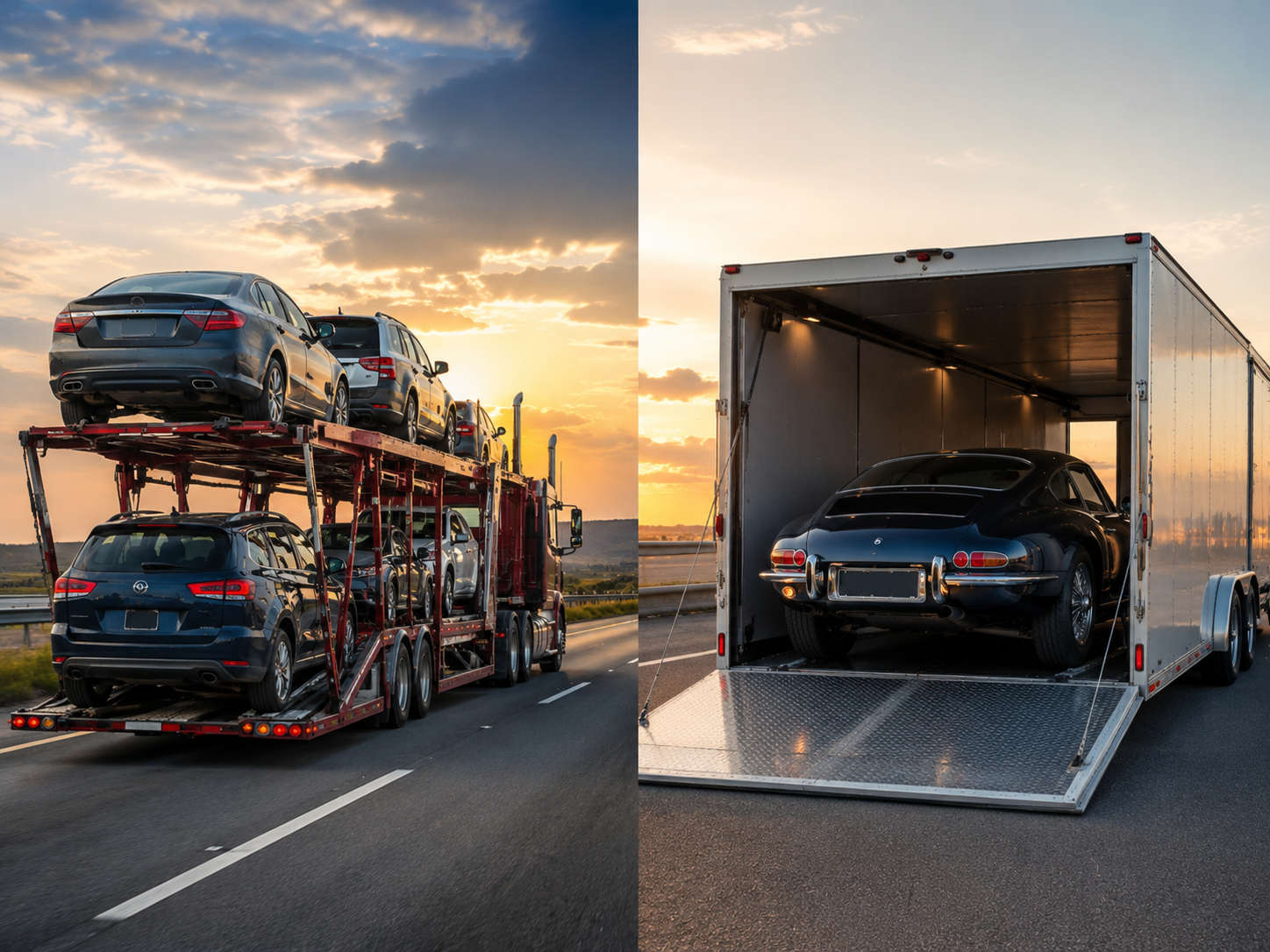
Open transport works well for many standard vehicles. Enclosed transport adds protection for vehicles that need extra care. |
Choose Open Transport If:
- Your vehicle is a daily driver.
- You want a more budget-friendly option.
- Your route is common or popular.
- You are comfortable with standard weather and road exposure.
- You want more carrier availability.
- Your vehicle does not require special protection.
- You are shipping a standard car, SUV, van, or pickup truck.
Choose Enclosed Transport If:
- Your car is classic, exotic, luxury, or collectible.
- The vehicle has high financial value.
- The vehicle has strong sentimental value.
- You want extra protection from weather and road exposure.
- The car has custom paint, restoration work, or special modifications.
- The vehicle is low-mileage or showroom-quality.
- You would feel uncomfortable placing it on an open carrier.
10. What About Door-to-Door Service?
Both open and enclosed transport may be available with door-to-door service, depending on the route and location.
But “door-to-door” does not always mean the truck can pull directly into your driveway.
Auto transport trucks are large. Enclosed trailers can also require space to safely load and unload vehicles.
If your street is narrow, restricted, gated, steep, low-clearance, or difficult for a carrier to access, the driver may coordinate a nearby safe location.
That could be a large parking lot, wide street, shopping center, or accessible meeting point.
This is normal.
The priority is always safe loading, safe unloading, and clear communication.
11. What Type of Vehicle Are You Shipping?
This is one of the most important questions.
A normal commuter car may not need the same treatment as a collector vehicle.
A family SUV may be perfectly fine on an open carrier.
A classic convertible with a fresh restoration may deserve enclosed transport.
A dealership purchase may be fine with open shipping, unless the vehicle is rare, high-end, or especially valuable.
A luxury vehicle may go either way depending on the owner’s preference, route, and budget.
There is no one-size-fits-all answer.
That is why a real conversation can help.
When you speak with someone who understands auto transport, you can explain the vehicle, your timing, your concerns, and your priorities.
Then the recommendation becomes clearer.
Shipping a Classic, Luxury, or Daily Driver?
Whether your vehicle belongs on an open carrier or inside an enclosed trailer, Transport My Automobile can help you choose the right option.
Get Help Choosing the Right Option12. Preparing Your Vehicle for Either Option
Whether you choose open or enclosed transport, vehicle preparation still matters.
The basics are similar.
Clean the car enough for inspection. Remove personal items. Keep the fuel tank around one-quarter full. Take photos before pickup. Make sure the vehicle can be accessed. Check for visible leaks or mechanical issues. Have keys ready.
If the vehicle does not run, say so in advance.
If the vehicle has low clearance, special starting instructions, alarm issues, custom modifications, or anything unusual, communicate that before pickup.
The more accurate the information, the smoother the transport process can be.
Vehicle Shipping Preparation Checklist
- Clean the vehicle enough for a clear inspection.
- Remove personal items before pickup.
- Keep the gas tank around one-quarter full.
- Take photos of the vehicle before it is loaded.
- Check tires, battery, and visible leaks.
- Share any special instructions with the transport coordinator.
- Confirm pickup and delivery locations.
- Make sure the vehicle can be accessed safely.
- Have keys ready.
- Review the Bill of Lading at pickup and delivery.
Simple preparation can make a big difference in creating a smoother shipping experience.
13. The Honest Answer: It Depends on the Vehicle
People often want one simple answer.
Open or enclosed?
Cheaper or safer?
Standard or premium?
But the honest answer is:
It depends on the vehicle.
It depends on the route.
It depends on the timing.
It depends on the owner’s comfort level.
It depends on whether the car is simply transportation or something more personal.
For some people, a car is a practical tool.
For others, it is a dream, a memory, a restoration project, a reward, a business asset, or a piece of family history.
That difference matters.
The right auto transport option should respect that difference.
14. Frequently Asked Questions About Open vs. Enclosed Car Shipping
1. What is the main difference between open and enclosed car shipping?
Open car shipping moves vehicles on an open carrier, while enclosed car shipping moves vehicles inside a covered trailer. Open transport is more common and usually more affordable. Enclosed transport offers extra protection and is often used for classic, exotic, luxury, or high-value vehicles.
2. Is open car shipping safe?
Yes, open car shipping is widely used and works well for many standard vehicles. The vehicle is exposed to normal road and weather conditions, but open transport is a common and practical option for daily drivers and many regular vehicle shipments.
3. Is enclosed car shipping worth it?
Enclosed car shipping may be worth it if your vehicle is classic, exotic, luxury, collectible, restored, custom, low-mileage, or especially valuable to you. It provides additional protection compared with open transport.
4. Which option is cheaper?
Open transport is usually more affordable because open carriers are more common and can often carry more vehicles. Enclosed transport usually costs more because it is more specialized and provides added protection.
5. Which option is better for a classic car?
Enclosed transport is often recommended for classic cars, especially if the vehicle has been restored, has custom paint, has high value, or needs extra protection from weather and road exposure.
6. Which option is better for a daily driver?
Open transport is usually a practical choice for daily drivers, standard sedans, SUVs, vans, and pickup trucks. It is commonly used and often provides a good balance of value and availability.
7. Does enclosed transport take longer?
It can, depending on the route and availability. Enclosed carriers are more specialized and may be less common than open carriers, so scheduling can sometimes require more coordination.
8. Can SUVs and trucks be shipped enclosed?
Sometimes, yes. It depends on the size, height, weight, and trailer availability. Larger vehicles may require special planning, so accurate vehicle information is important when requesting a quote.
9. Will my car be insured during transport?
Auto transport carriers generally carry insurance, but customers should always ask questions, review details, and understand the process before shipping. The Bill of Lading is also important because it records the vehicle’s condition at pickup and delivery.
10. How do I know which option to choose?
Start with the vehicle type, value, route, timing, budget, and your comfort level. If the car is a standard daily driver, open transport may be enough. If it is classic, exotic, luxury, collectible, restored, or highly valuable, enclosed transport may be the better choice.
Final Thoughts
Choosing between open and enclosed car shipping does not have to be complicated.
Open transport is the practical choice for many standard vehicles. It is common, efficient, and often more affordable.
Enclosed transport is the premium choice for vehicles that deserve additional protection. It is often better for classic, exotic, luxury, collector, restored, or high-value vehicles.
The key is not to choose based on fear.
And not to choose based only on price.
The key is to choose based on what your vehicle actually needs.
A daily driver and a collector car do not always need the same shipping plan.
A family SUV and a restored classic convertible do not always belong on the same type of carrier.
A good transport experience starts with good information, realistic expectations, and clear communication.
Because at the end of the day, shipping a car is not just about getting it from one place to another.
It is about choosing the right way to get it there.
Still Deciding Between Open and Enclosed Car Shipping?
Whether you are shipping a daily driver, family SUV, pickup truck, classic car, luxury vehicle, exotic car, or recently purchased vehicle from another state, Transport My Automobile can help you choose the right option.
Speak with a real person who can explain the difference, answer your questions, and help you plan your vehicle shipment with clarity and confidence.
Request a Free Car Shipping Quote